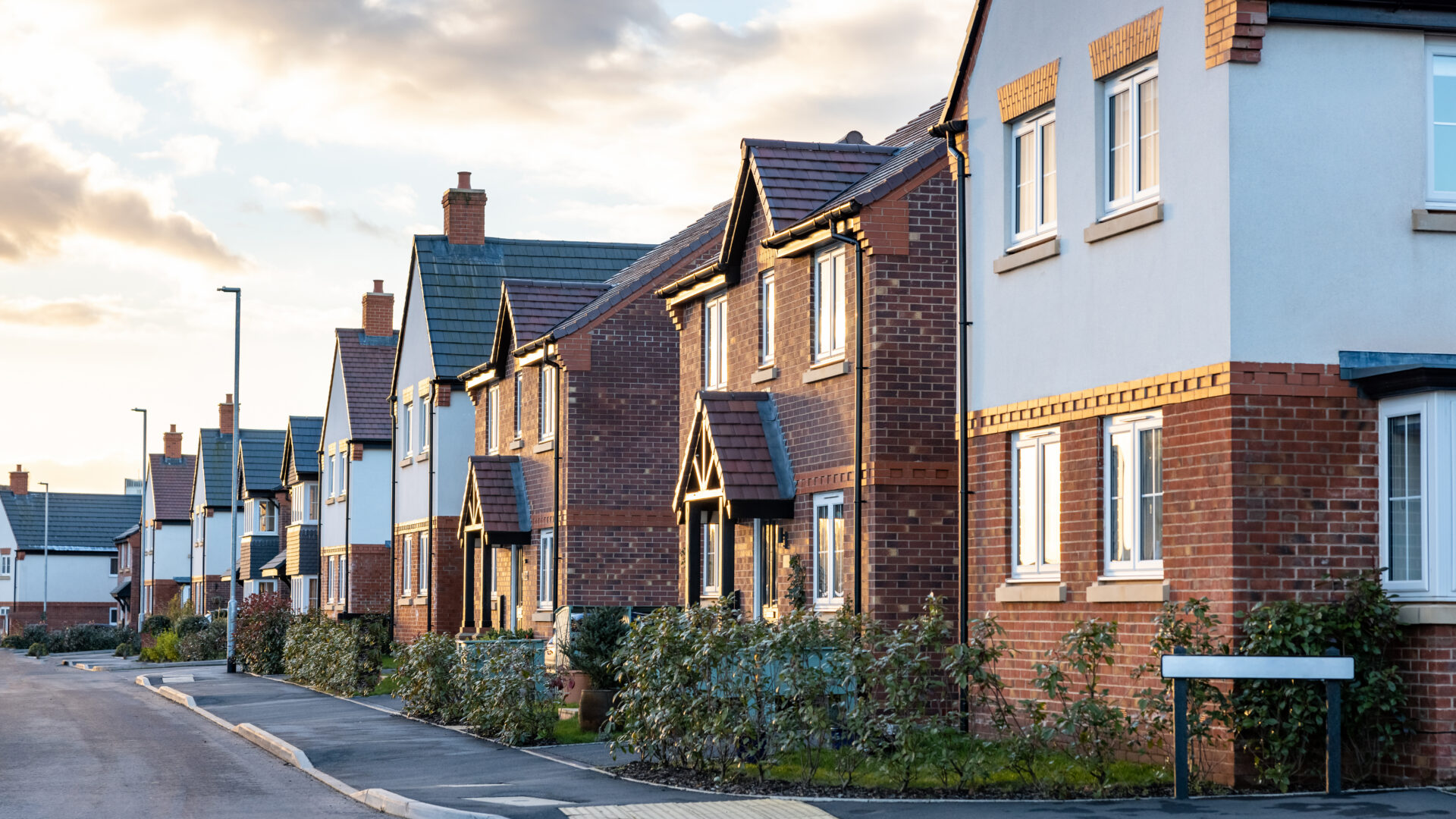

Most new build homes in England never reach the open market.
According to data published by Alto in April 2026, just 1 in 10 newly built homes — around 21,261 out of an estimated 200,000 completions in 2024/25 — were available for buyers to purchase through the open market. The rest went to build-to-rent developments, developer direct sales or affordable housing allocations.
New homes are going up across England. But research from Alto shows that just 1 in 10 new build homes for sale ever reaches the open market. Here is where they are going instead — and what it means for buyers, renters and estate agents.
- 1 in 10 new homes built in England in 2024/25 reached the open market according to Alto, April 2026
- 44% of UK adults say there are not enough homes to buy — Alto survey, 2,000 respondents, March 2026
- 46% believe new builds in their area are aimed at investors, not local buyers — Alto, March 2026
The new build homes crisis nobody is naming
A “new build home for sale” means a newly constructed property available on the open market — where buyers can search, view and make offers, typically through estate agents or property portals.
England has a housing supply problem. That much is widely accepted. But there is a sharper question buried inside that debate: of the new homes actually completed each year, how many are genuinely available for people to buy?
Data published by Alto in April 2026, combining Alto’s CRM data with ONS housing completion figures, puts a number on it for the first time. Of an estimated 200,000 new properties built in England in 2024/25, just 21,261 made it to the open market.
That is roughly 1 in 10. Nine in ten newly built homes went somewhere else entirely.
Where do the other 90% go?
New build homes that do not reach the open market are typically absorbed by three routes: build-to-rent, developer direct sales, and affordable housing or shared ownership schemes.
Build-to-rent
Build-to-rent is a model where institutional investors fund entire residential developments that are retained as managed rental portfolios — never sold on the open market. Build-to-rent has grown rapidly across UK cities over the past decade, with tens of thousands of units completed or in the pipeline. Once absorbed into a build-to-rent portfolio, homes do not re-enter the sales market.
Developer direct sales
Some developers sell new homes off-plan directly to buyers, bypassing estate agents and property portals. These transactions complete but not through the channels most buyers use when searching for a home.
Affordable housing, shared ownership and section 106
Planning obligations require developers to allocate a proportion of every major scheme to affordable housing or shared ownership. These homes are ringfenced and allocated through housing associations, not through the open market.
Each route serves a legitimate purpose. Collectively, they are removing the majority of new housing supply from the open sales market.
The regional picture: where it is worst
Regionally, the proportion of new build homes reaching the open market ranges from just 2.12% in London to 17.01% in the South West, according to Alto data published April 2026.
- London — 2.12% of new homes reach the open market
- North West — 7.51%
- North East — 8.49%
- East of England — 9.67%
- South East — 10.10%
- East Midlands — 11.67%
- Yorkshire and the Humber — 13.66%
- West Midlands — 13.86%
- South West — 17.01%
London’s figure is the starkest. In the UK’s largest housing market, fewer than three in every hundred new homes are openly available to buy. The capital’s new build pipeline is being absorbed almost entirely by build-to-rent, developer direct sales and affordable housing allocations.
Even in the South West — the most accessible region — more than four in five new builds bypass the open market.
What people actually think
Public perception closely tracks the data. Most UK adults believe new homes are going to investors rather than buyers, according to a nationally representative survey of 2,000 adults commissioned by Alto.
- 44% say there are not enough homes available to buy
- 46% believe new builds in their area are aimed at investors rather than local buyers
- 46% say that even though they see new homes being built, it doesn’t feel like more homes are actually available
- 61% think property investors are crowding out first-time buyers
- 48% would support restrictions on investors buying newly built homes
These perceptions are accurate. People can see the construction activity. They cannot access the output.
Among renters, 45% say they are not confident they will find a suitable home to buy in their preferred area within five years. Among those who do not expect to ever own, the primary barriers are cost (60%) and income (58%).
The aspiration to own is there. The accessible supply is not.
Is the UK becoming a nation of renters?
The UK is showing early signs of a structural shift toward a European-style renting model, where long-term rental is the norm rather than the exception.
In Germany and the Netherlands, large-scale rental developments form the backbone of urban housing. Long-term renting is normalised and well-regulated. For decades, that model felt culturally alien to the UK.
The data suggests that gap is closing — not by choice, but by structural pressure. When Alto asked 2,000 UK adults about a European-style renting model, 36% said they would view its wider adoption positively. Only 19% were opposed.
There is a meaningful difference between choosing to rent in a stable, well-managed development and having that choice made by the market. What the data describes is increasingly the latter.
What this means for first-time buyers
First-time buyers are the group most exposed to the shrinking open market for new build homes, as they are disproportionately reliant on new build supply and government ownership schemes.
Government schemes designed to boost homeownership — Help to Buy, the mortgage guarantee scheme and its successors — were built around the assumption that new homes flow into the open market at scale. When that flow runs at 10%, the gap between policy intent and lived experience widens considerably.
Among those who had viewed new-build developments in the last three years, according to Alto research:
- 11% said all the homes they viewed were within their reach
- 27% said most were accessible
- 32% said only some were
- 24% said very few were realistically within reach
- 5% said none of the homes they viewed were affordable or eligible for them
Access, not awareness, is the problem. The homes are being built. For most first-time buyers, they remain out of reach.
What this means for estate agents
As a growing share of new build supply bypasses the open market, the volume of homes available for agents to transact on is structurally shrinking — independent of market cycles.
Build-to-rent portfolios do not churn. They are not re-instructed. They do not generate repeat transactional opportunity. Once absorbed into institutional ownership, that stock leaves the competitive market for good.
This is not a correction. It is a reallocation of supply — and it compounds year on year. The agencies that grow through this period will not be doing more of the same. They will be operating smarter: identifying likely movers earlier, managing compliance without it consuming the team, and delivering genuine value on every instruction. Volume-led models will feel the squeeze. Value-led ones will not.
Find out what’s actually available near you
Alto has built a free tool that shows — by postcode — how many newly built homes in your area are currently available to buy on the open market. Live data. Not planning permissions or completions: homes you can actually view and make an offer on today.
Check your postcode at altosoftware.co.uk/where-are-the-homes
Key takeaways
- Just 1 in 10 new build homes in England reached the open market in 2024/25
- London is worst: only 2.12% of new homes are available to buy
- Build-to-rent, developer direct sales and affordable housing are absorbing the rest
- 44% of UK adults say there are not enough homes to buy
- 61% believe investors are crowding out first-time buyers
- The UK is structurally shifting toward a European-style renting model
- For estate agents, this is a long-term structural pressure not a cyclical dip
Frequently asked questions
Why are so few new build homes available to buy in the UK?
Most newly built homes in England are diverted away from the open market into build-to-rent developments, developer direct sales or affordable housing schemes. According to data published by Alto in April 2026, just 1 in 10 new homes built in 2024/25 reached the open market where most buyers search for properties.
What percentage of new build homes go to investors or landlords?
A significant share is absorbed by institutional investors through build-to-rent. Separately, 46% of UK adults believe new-build homes in their area are aimed at investors rather than local buyers, and 61% believe investors are crowding out first-time buyers, according to an Alto survey of 2,000 UK adults in March 2026.
How does build-to-rent affect buyers looking for new homes?
Build-to-rent removes newly built homes from the sales market permanently. Unlike standard buy-to-let, these institutional portfolios are held long-term and never resold. As build-to-rent grows, it structurally reduces the volume of new homes reaching the open market, intensifying competition for the supply that remains available to buy.
Which regions of England have the fewest new build homes for sale?
London has the lowest proportion — just 2.12% of new builds are available to buy, according to Alto data published April 2026. The North West (7.51%), North East (8.49%) and East of England (9.67%) also rank among the worst. The South West has the highest proportion at 17.01%, though even there, most new homes bypass the open market.
Is the UK becoming a nation of renters?
The data suggests a structural shift is underway. With build-to-rent growing and open market supply shrinking, the UK is beginning to resemble European markets like Germany where long-term renting is the norm. In an Alto survey, 36% of UK adults said they would view a European-style renting model positively.
What does falling new build supply mean for estate agents?
As more new build supply goes to build-to-rent and developer direct channels, the pool of open market stock — and potential instructions — shrinks over time. This is structural, not cyclical. Agents reliant on volume face increasing pressure. Those operating with stronger client relationships and greater operational efficiency are better positioned.
How can I check how many new build homes are available to buy near me?
Alto has built a free postcode tool showing how many new build homes in your area are currently on the open market. It uses live data — not planning permissions or completions — so you can see what is genuinely available to buy. Access it at altosoftware.co.uk/where-are-the-homes.
Why are new build homes out of reach even for buyers with a deposit?
Even among those who have actively viewed new builds, only 11% found all the homes they saw within reach, according to Alto research. 24% said very few were accessible and 5% said none were — due to price, eligibility criteria or unit size, not just deposit size.